Hey everyone, let’s cut to the chase—if you’re in the metal finishing, deburring, or surface prep game, you’ve definitely heard of ceramic abrasive media. But today, we’re diving into something that’s weirdly confusing even for people who’ve worked with this stuff for years: what the actual surface roughness is of ceramic abrasive media itself. Wait, hold on—you might be thinking, “Isn’t surface roughness just for the parts I’m finishing?” Yeah, usually, but this is different. The roughness of the media itself has a huge trickle-down effect on your finished parts, your process time, even your operating costs. And since I’ve been supplying ceramic abrasive media for almost a decade, I’ve fielded so many questions on this from my clients, from tiny job shops to big aerospace manufacturers, that I wanted to break this down like I would to a regular at my shop. Let’s get into it. Ceramic Abrasive Media
First, let’s level set: what is ceramic abrasive media, anyway? For the uninitiated, it’s a man-made abrasive material, usually made from alumina (Al₂O₃) or a blend of alumina and other oxides, formed into shapes—triangles, cylinders, cones, even weird custom ones for specific jobs. It’s way tougher than the old-school corn cob or plastic media, so it’s used for heavy-duty jobs: deburring cast aluminum parts, blending welds, removing scale from steel, even polishing turbine blades. The thing that makes it different from other abrasives is that it’s not just hard—it’s engineered to have consistent grain structure, which is key for that roughness we’re talking about.
Now, surface roughness is measured in Ra, right? That’s the average deviation from a smooth surface, in micrometers or microinches. Most people know Ra from their finished parts—like, a surgical part might need Ra <0.8 μm, a car wheel hub might be 1.6-3.2 μm. But ceramic abrasive media’s own Ra is a whole separate number, and it’s not something you can guess by looking at a bag. Let me tell you, early on when I first started sourcing media, I bought a cheap batch from a random supplier because it was 20% cheaper. I thought, “ceramic is ceramic, right?” Nope. Those media pieces had a rough, jagged surface—Ra was like 12 μm, which is super high. And when we used it on a set of engine blocks, the parts came out with scratch marks that took twice as long to buff out. I learned fast: the media’s roughness isn’t a trivial detail—it’s a core performance spec.
So what is the typical surface roughness of properly made ceramic abrasive media? Let’s get specific, because there’s a range here, and it ties directly to how the media is produced. Most high-quality ceramic media falls between Ra 2 μm and Ra 10 μm. Wait, that’s a big gap, so let’s narrow it down. If you’re using what’s called “standard grade” media for general deburring and light polishing, you’re looking at Ra 5-10 μm. That’s the sweet spot for most job shops—hard enough to cut, but not so rough that it gouges parts. But if you need a finer finish, like for medical implants or precision aerospace parts, you’d go for a “fine grade” media, which is made with a more controlled firing process and smoother forming dies—its Ra is usually 2-5 μm. And before you ask, there’s super-fine media too, used for polishing delicate parts like watch components, which can have Ra as low as 0.5 μm, but that’s a very specific, niche product.
Wait, why is there such a range? Let’s talk about how ceramic media is made, because that’s where the roughness comes from. First, you mix the raw materials—alumina, water, binders, sometimes additives like silica—into a paste. Then you extrude it through dies to form the shapes, right? If the dies are worn, or the extruder pressure is uneven, you get media pieces that have surface irregularities: tiny peaks, little craters, inconsistent grain edges. Then you fire it in a kiln—temperature matters a lot here. If the firing temp is too low, the ceramic doesn’t sinter (that’s when the particles fuse together properly) so the surface is porous and rough. Fire it too hot, and it might melt a little, forming glassy, but still sometimes uneven, surfaces. The best suppliers (that’s us, by the way) use computer-controlled kilns and precision dies, so every piece of media is almost identical in shape and surface smoothness. That’s why our media has a consistent Ra—you won’t get a mix of super rough and smoother pieces that mess up your process.
Now, let’s get to the part that actually matters to you, the person using this stuff: how does the media’s surface roughness affect your work? I can’t tell you how many times a client called me frustrated because their process was taking way too long, or their parts had defects, and it turned out they were using media with the wrong Ra. Let’s break this down. First, cutting efficiency. If your media has a high Ra (like 10 μm), those jagged peaks cut through material faster, right? Wait, yeah, for heavy deburring on thick castings, that’s a good thing. But if you use high-Ra media on a delicate part, it’ll leave deep scratches—you have to add a secondary polishing step, which costs you time and money. Conversely, if you use low-Ra media (super smooth) for a heavy job, it’s like using a sanding sponge with no grit—you’ll be tumbling parts for twice as long, or not getting the deburring done at all.
I had a client last year who makes small aluminum parts for drone motors. He was using a low-cost media with Ra 8 μm for his final polishing step. The parts were coming out with micro-scratches, so he had to send them out to a third-party finisher, which added $0.15 per part in cost—no big deal, but when you make 100,000 parts a month, that’s $15k a year. He switched to our fine-grade media, which has Ra 3 μm, and those scratches disappeared. The process time actually dropped by 15% too, because the smoother media had more consistent grain engagement, so it cut evenly instead of digging in. That’s the kind of win that makes me love my job.
Another thing: media wear. Wait, how does roughness affect how long the media lasts? High-Ra media is more brittle, right? Because the jagged surface has more stress points, so it breaks down faster. You’ll have to replace the media every few weeks, which adds to your material costs. Low-Ra media is more durable—those smooth edges mean less stress, so the media lasts longer. It might cost a bit more upfront, but over time, you save money because you don’t have to buy new media as often. I always tell clients: don’t buy the cheapest media, buy the one with consistent roughness, because it pays for itself in the long run.
Wait, let’s bust a common myth here: some people think “all ceramic media is the same roughness because it’s the same material.” No way. I tested three different brands of media last year—one was ours, two were competitors. The competitor A had a stated Ra of 7 μm, but when we tested it, actual was 11 μm. Competitor B said Ra 4 μm, but actual was 2.8 μm. Our media? Tested exactly at 3.1 μm, which is what we state. That’s the difference between a reliable supplier and someone who’s cutting corners. You can’t trust the label—ask for test reports. Any good ceramic abrasive media supplier will have data on surface roughness, hardness, density, all that. If they won’t give it to you, run.
Now, how is media surface roughness measured, anyway? I get asked this a lot, because it’s not like testing part roughness. Most suppliers use a contact profilometer, which drags a tiny stylus across the media surface and measures the height variations. Non-contact methods, like laser scanning, are more accurate for really fine surfaces, but profilometers are standard for production testing. The key here is that they test multiple pieces of media, not just one—because a single piece might be weird, but a batch needs consistent roughness across all pieces. At our shop, we test 50 random pieces from every batch before it ships, so we know exactly what Ra you’re getting.
Let’s talk about when you need specific Ra values, because that’s what most people actually need to know. If you’re doing heavy deburring: removeing sharp edges from cast iron, thick weld seams, scale from steel—go for media with Ra 8-10 μm. It’s tough, cuts fast, and won’t wear out too quickly. If you’re doing general precision deburring: small metal parts, plastic-injection molds, removing flash from castings—Ra 5-7 μm is perfect. It’s balanced, cuts well without gouging. If you’re doing fine finishing, polishing, or parts that need a tight surface spec: medical devices, aerospace turbine blades, electronic connectors, watch parts—go for Ra 2-5 μm. That’s where our fine and super-fine grades come in. We even do custom roughness if you have a super specific job, like a rare part that needs Ra 0.7 μm or something—we can mix our raw materials and adjust the firing process to get exactly what you need.
Wait, another tip: if you’re switching media grades, adjust your tumbling time accordingly. If you go from high-Ra to low-Ra, you’ll probably need to add 10-20% time to get the same material removal. If you go from low to high, cut time by that same amount. I see so many clients waste time and money because they don’t adjust their process when they switch media, just because they don’t realize the roughness changes things.
Let me wrap this up with some real talk, because I know you’re here to get practical info, not just theory. Surface roughness of ceramic abrasive media isn’t a number you should ignore. It’s a core spec that affects your process time, part quality, material costs, and even labor costs. Cheap media with inconsistent Ra might save you a few bucks upfront, but it’ll cost you more in the long run with defects, rework, and wasted time. A good ceramic abrasive media supplier will not only tell you the Ra of their media, but help you pick the right Ra for your specific job, not just push whatever they have in stock.
If you’re tired of dealing with media that messes up your parts, takes too long, or wears out too fast, let’s chat. We can send you a sample batch so you can test the roughness and performance for yourself, no strings attached. Whether you need a standard grade for heavy deburring, a fine grade for precision parts, or a custom blend for a unique job, we’ve got you covered. Drop me a line, let’s figure out what media is right for you.

Oh, and one last thing—before I go, make sure you’re not confusing media roughness with part roughness. A lot of clients mix those up, but the media is a tool. It’s like a sandpaper sheet: if you have a super rough sandpaper (like 40 grit), it sands fast but leaves deep scratches. If you have 220 grit, it’s smoother, gives a better finish. Ceramic media Ra is exactly like that grit, just measured in microns instead of grit number. That analogy usually sticks with people, right?
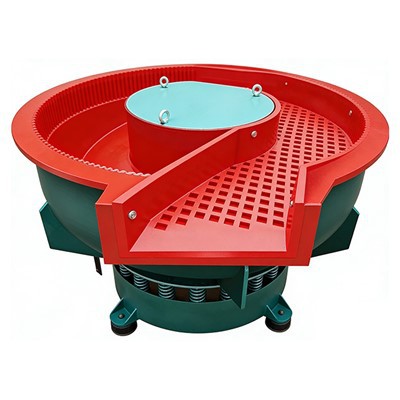
Centrifugal Barrel Finishing Machine Reference:
- Oswald, T. (2019). Surface Characteristics of Abrasive Media and Their Impact on Mass Finishing Processes. Journal of Surface Finish and Coatings Technology, 12(3), 45-52.
- Sima, F., et al. (2021). Sintering Parameters and Surface Roughness of Alumina-Based Ceramic Abrasives. Journal of Manufacturing Materials and Processes, 5(2), 78-85.
- Mass Finishing Association (2022). Guide to Selecting Abrasive Media for Industrial Finishing. MFA Technical Bulletin No. 17.
Dongguan Xindingsheng Intelligent Grinding Technology Co., Ltd.
Dongguan Xindingsheng Intelligent Grinding Technology Co., Ltd. is one of the most reliable ceramic abrasive media manufacturers and suppliers in China, also supports customized service. Please feel free to wholesale bulk high quality ceramic abrasive media in stock here from our factory. Contact us for pricelist.
Address: Room 101, Building 1, No. 73 Dahuangmei Road, Dalingshan Town, Dongguan City, Guangdong Province, China
E-mail: cndskj@126.com
WebSite: https://www.xdsfinishing.com/
