If you’re a parts processing supplier, you know that the industry isn’t just about cutting metal or shaping plastic anymore—trends shift faster than a CNC tool’s feed rate, and falling behind means missing out on better efficiency, higher quality, and happier clients. Over the past 18 months, I’ve had front-row seats to these changes, working alongside automotive, aerospace, and medical device clients who keep pushing for more precise, cost-effective parts. Here’s what’s actually driving the shop floor right now, not just the buzzwords you’ll see on industry press releases. Parts Processing
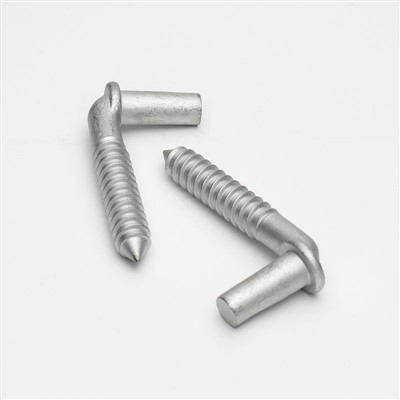
First up: digital twin tech is no longer a “future” concept—it’s the first step most of my clients take before a single spindle spins. A couple years back, a medical device maker would send a CAD file of a titanium hip part, and we’d run a test part, fix a flaw, then run the real batch. Now, they send a digital twin of the full manufacturing line, and we integrate that twin directly into our shop’s control system. Last quarter, we used this for a series of small orthopedic screws: the twin let us simulate tool wear, material shrinkage, and even machine vibration before we touched the raw stock. The result? We cut test runs by 60%, and part rework dropped from 8% to 1.2% that quarter. No more guessing—every part comes off the line with its virtual twin already signed off by the client’s engineering team.
Closely tied to digital twins is the rise of adaptive manufacturing, and it’s changing how we handle variable parts. Let’s say an aerospace client sends a batch of turbine blades, each slightly different because of raw material variations (no two forged titanium blanks are identical the same way). Old systems run a fixed program for every part, which works only if every blank matches the CAD specs. Adaptive manufacturing uses real-time sensors on the machine—tiny probes that touch the part mid-process—to adjust feed rate, tool path, or even coolant flow as it works. We picked up our first adaptive mill six months ago, and the number of scrapped turbine blades went from 5 out of 100 to 1 out of 100. The best part? It doesn’t require a master’s degree to run—our operators, who’ve been with us an average of 12 years, picked up the system in three days. That’s a big deal in a field where skilled labor is hard to find.
Then there’s the shift toward sustainable processing that’s not just greenwashing. A lot of suppliers say they’re “eco-friendly” but still use way more coolant and energy than needed. Right now, we’re seeing three key sustainability moves in parts processing: dry machining, high-pressure minimal quantity lubrication (MQL), and material recycling that goes beyond just scrap metal. Dry machining means cutting without any liquid coolant—we used to avoid this for steel parts because of tool heat, but new diamond-coated tools handle it perfectly. For our stainless steel small parts, dry machining cut coolant use by 95% and energy per part by 12% last month. High-pressure MQL uses a tiny, precise mist of oil instead of a flood; it’s 10 times cleaner than standard coolant and works for both aluminum and brass parts. And recycling? We now send almost all our metal and plastic scrap to a local recycler that processes it back into raw stock, cutting our waste hauling by 70% and even earning us a small rebate each quarter. Clients love this because it lets them meet their own ESG targets without paying extra.
Additive manufacturing (3D printing) isn’t just for prototypes anymore—it’s a full-on production tool, especially for complex parts. I still talk to clients who think 3D printing is too slow or too expensive for high-volume runs, but that’s outdated. We now have two industrial 3D printers running 24/7, and last month, we used them to make 2,000 small aluminum brackets for a construction equipment maker. The brackets had internal lattice structures that would’ve been impossible to machine with traditional methods—we’d have had to weld pieces together, which added time and risk of defects. The 3D-printed parts are 15% lighter and 20% cheaper than the welded ones, and they passed all stress tests first time. The sweet spot here is parts with complex internal geometry; if you just need a simple block, traditional machining is still better, but for anything with unique design, 3D printing is now a go-to.
Skilled labor is a trend we can’t ignore, and it’s driving a lot of tech changes. Five years ago, most new hires learned on old manual mills and basic CNCs. Now, young workers coming in want intuitive, connected machines—tools that let them pull up digital part specs on a tablet, not just a clunky monitor. We’ve started a small apprenticeship program where we train high school grads on our adaptive machines and digital twin systems, which means we’re not just keeping up with tech—we’re training the people who will run it. The flip side: we’ve had to invest more in upskilling our tenured operators too. Last year, we sent four of our most experienced mill operators to a two-day course on digital twin integration, and they now train new hires on that system. It’s not cheap, but it keeps our team engaged and our skills sharp.
Quality control is another area where tech is making huge leaps. We used to do final inspections with a coordinate measuring machine (CMM) that takes 20 minutes per part and only checks a few key points. Now, we use in-line optical scanners that snap 2,000 measurements per part in 10 seconds, and they catch tiny flaws—like a 0.001mm scratch—that the old CMM would miss. For our medical parts, this is non-negotiable: the FDA requires 100% inspection for critical components, and these scanners let us meet that requirement without slowing down the line. Last month, a client flagged a tiny defect in a batch of parts we thought were good; the optical scanner caught 12 of the 1,000 parts, which the old CMM would’ve missed because it only checked two surfaces. That trust is why they’ve been working with us for three years.
So what does all this mean for companies looking for a parts processing partner? The best suppliers right now aren’t just quoting a price per part—they’re offering end-to-end support: from design tweaks that reduce production time, to sustainable practices that lower your carbon footprint, to tech that cuts rework and lead times. Over the past year, I’ve turned away a few jobs where the client wanted a cheap, low-volume part that we couldn’t make cost-effectively with our current tools, but I’ve also won more jobs because we could offer digital twin testing that saved them months of development time.
If you’re working on a project—whether it’s a new aerospace component, a medical device part, or a custom industrial tool—let’s talk. We can walk you through how the latest processing tech can streamline your production, reduce waste, and get parts to you faster without sacrificing quality.
Output Shaft References
- Global Manufacturing Technology Association. 2024 Trends in Precision Parts Processing.
- International Journal of Production Research. Adaptive Machining for High-Volume Metal Components.
- U.S. Department of Energy. Sustainable Manufacturing Practices for Precision Parts.
- Society of Manufacturing Engineers. Digital Twin Applications in Small-Batch Production.
Taizhou Liuhuan Machinery Co., Ltd.
As one of the most professional parts processing manufacturers and suppliers in China, we’re featured by quality products and good service. Please rest assured to buy customized parts processing made in China here from our factory. For quotation, contact us now.
Address: Xinyuan Industrial Zone, Damaiyu Street, Yuhuan City, Zhejiang Province,China
E-mail: tzlhmachining@gmail.com
WebSite: https://www.tzlhmachining.com/
