If you’ve ever stood on a cargo ship’s deck during a sudden rainstorm, watching waves crash over metal railings and electrical cables swaying in the wind, you’ve probably wondered how all that sensitive onboard gear keeps working. As a marine electrical panel supplier who’s been designing and building these systems for 12 years, I’ve seen firsthand what happens when anti-static features are an afterthought, not a priority. Last year, we had a client out in the Gulf of Mexico call us in the middle of the night—their vessel’s main distribution panel had shorted out, and the root cause turned out to be a static discharge that jumped from an ungrounded bus bar to a nearby control wire. That downtime cost them over $200,000 in lost cargo operations in just three days. Stories like that stick with me, which is why every panel we build starts with anti-static engineering, not an after-installation patch. Marine Electrical Panel
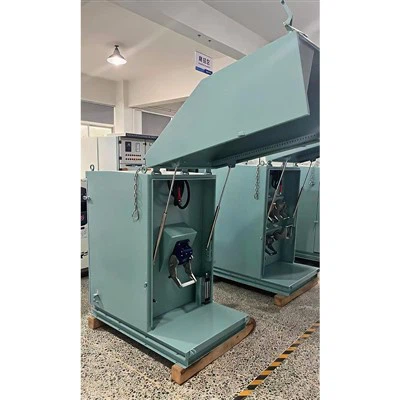
First, let’s ground this in the unique environment marine panels face. Unlike their land-based counterparts, marine panels operate in high humidity, salt spray, and constant vibration—all of which amplify static electricity risks. Saltwater is a great conductor, so even a small static charge on a panel’s surface can find a path to ground through a stray water droplet, and that can fry delicate microchips, trip circuit breakers unexpectedly, or even ignite flammable fumes in engine rooms or cargo holds where gas-powered vehicles are stored. Static on a ship doesn’t just mess up a circuit board; it’s a safety hazard for the entire crew.
The most basic anti-static feature we integrate is the entire panel’s grounding system, but not just any grounding. Land-based systems often use copper bus bars for current carry, but marine environments require a redundant, bonded grounding network we call a “Faraday cage framework.” Every metal component in the panel—bus bars, enclosure walls, mounting brackets, even terminal blocks—are connected to a common grounding point that’s directly tied to the ship’s main hull ground. Here’s what makes this different from standard grounding: we use tinned copper lugs instead of crimped connections for every ground path, and we test each connection with a micro-ohmmeter to ensure resistance is less than 0.001 ohms. On a recent container ship project, we even added a secondary ground path for the control module section, just in case the primary path is compromised by corrosion. Static charges can’t build up if they have a direct, low-resistance path to the hull, where they dissipate safely into the surrounding water.
Next, we specify anti-static materials for every non-conductive component inside and outside the panel. This isn’t just about picking a “static-dissipative” plastic off the shelf—marine-grade materials have to resist salt, UV rays, and extreme temperatures, so we partner with two specialized polymer manufacturers to source materials that meet ISO 16750 standards for marine electrical equipment. The terminal block covers, cable channel liners, and even the plastic label holders on our panels are made from static-dissipative polymers with a surface resistance of 10^6 to 10^9 ohms per square. That range is perfect: high enough to prevent direct current leakage, but low enough to bleed off any static charge that builds up from friction between cables and plastic parts, or from the panel’s exposure to moving air and humidity. We also never use standard acrylic labels—those can build up static when rubbed by tool handles or crew uniforms. Instead, we print labels on static-free vinyl that’s treated to prevent charge buildup, and we seal them with a clear, static-dissipative coating to stop salt spray from seeping under.
Cable management is another area where we focus heavily on anti-static design. Every cable running into or out of a marine panel needs a way to discharge static that builds up along the wire’s outer insulation. We don’t just run cables through standard cable glands—we use EPDM rubber glands with integrated grounding braids, which make direct contact with the cable’s metal shield and connect that shield to the panel’s ground network. This is critical because static can build up along a cable’s length as it’s flexed by the ship’s motion, and if that charge isn’t grounded, it can arc to a nearby unshielded control wire. On offshore supply vessels, where crews often move heavy cables around during loading, we add a small static discharge brush to the end of cable runs that exit the panel enclosure—this brush brushes against a grounded metal rail as the cable is pulled out, bleeding off any residual charge before it reaches external equipment. I remember a project a few years ago where a competitor’s panel on a tugboat had to be replaced because they skipped this brush; the static built up on a towing cable, arced back into the panel, and destroyed the engine’s starting controller. We’ve never had that happen on a panel we built.
Surge protection devices (SPDs) tailored specifically for marine static discharge are non-negotiable for every panel we ship. Most land-based SPDs are designed for lightning strikes, but marine static comes from a different source: the triboelectric effect, which is what happens when two materials rub together, like a crew member’s rubber-soled boot against a metal panel, or a cable sliding through a gland. These charges are lower than lightning, but they’re frequent—dozens of small discharges every hour add up over time, gradually wearing down microchips and circuit boards. That’s why we use modular marine-grade SPDs that are rated for repetitive surge currents up to 10 kA, not just occasional lightning strikes. Each SPD is connected directly to the panel’s primary ground bus, and we test each SPD’s clamping voltage during assembly to make sure it’s between 100 and 200 volts—high enough to let normal system voltage pass, but low enough to divert any small static surge safely to ground. On a recent luxury yacht project, we added secondary SPDs to the navigation control section, since static from the yacht’s fiberglass deck can build up and travel through the power cable to the panel. The captain told us six months after delivery that they haven’t had a single navigation glitch related to static, which is a big win for us.
Corrosion protection is a hidden anti-static feature that most people overlook, but it’s one of the most important for marine panels. Salt spray eats away at metal connections, increasing resistance over time, which can turn a good ground path into a high-resistance one that can’t discharge static. That’s why we coat all metal grounding connections with a zinc-nickel alloy instead of standard zinc plating—this coating resists corrosion three times better, per ISO 9227 salt spray testing, and it’s also conductive, so it doesn’t add any resistance to the ground path. We also seal the panel enclosure with a silicon-based gasket that’s static-dissipative, not just a regular weather gasket. Regular silicone gaskets can build up static because they’re non-conductive, but our treated gaskets bleed off charge as it builds up on the enclosure surface. Last year, we did a 2-year follow-up on a fishing fleet that received our panels in 2021; their competitor’s panels had corrosion on ground connections that caused static-related control issues after 18 months, but ours had zero corrosion on ground points, and their static discharge tests came back well within ISO standards.
Now, let’s talk about testing, because a panel’s anti-static features only work if they’re actually there. We don’t just design these features—we verify them at three different stages: during raw material inspection, during assembly, and before shipping. For every panel, we run a static discharge test using an ESD (electrostatic discharge) simulator that generates a 15 kA charge, simulating the worst-case static discharge that a marine panel could face. We apply that charge to every external metal surface, every terminal, and every cable entry point, and we check that the panel’s internal circuitry remains undamaged and that all current flows as specified. We also run a “charge retention test”: we place a small 1000V static charge on the panel’s surface and measure how long it takes to bleed off to ground. For our panels, that time is less than 0.1 seconds—any longer, and the charge could arc to internal components. I’ve spent dozens of late nights in our test lab running these tests, especially on custom panels for offshore wind farm crews, where downtime means millions in lost power production. There’s no shortcut here; if a panel doesn’t pass the static test, it doesn’t leave our facility.
I know that some smaller ship repair yards or vessel owners might think anti-static features are an unnecessary extra cost, but after 12 years in this business, I can tell you that cutting corners here costs way more in the long run. I’ve seen crew members working on a panel with a non-static-dissipative glove get a small shock, which might seem like a minor annoyance, but that same charge can fry a $5,000 navigation sensor. I’ve seen a cargo ship’s main engine control panel go down because of a static discharge, delaying a shipment of perishable goods by four days. Those are the stories that make every hour we spend designing, testing, and building anti-static marine panels worth it.

If you’re a vessel owner, fleet manager, or electrical contractor looking for marine electrical panels that prioritize safety and reliability, not just meeting minimum standards, I’d love to chat. We build panels for all types of marine vessels—from tugboats and fishing trawlers to container ships and offshore wind support vessels—and we can customize anti-static features to fit your specific operating environment. We don’t just supply parts; we work with you to make sure your panel is built to stand up to the harsh marine conditions you face every day.
Pad Mounted Substation References:
- International Organization for Standardization. (2019). Marine electrical and electronic equipment – Environmental conditions and testing. ISO 16750:2019.
- American Bureau of Shipping. (2021). Guide for electrical and electronic systems on marine vessels. ABS Rules and Guides.
- Electrostatic Discharge Association. (2020). ESD control program requirements for marine electronic equipment. ANSI/ESD S20.20-2020.
- International Electrotechnical Commission. (2018). Basic standard for electrostatic discharge immunity. IEC 61000-4-2:2018.
Yuanzhuo Electrical Equipment (Jiangsu) Co., Ltd.
We’re well-known as one of the leading marine electrical panel manufacturers and suppliers in China. We warmly welcome you to wholesale high quality marine electrical panel at competitive price from our factory. If you have any enquiry about cooperation, please feel free to email us.
Address: Group 8, Chengdong Village, Fucheng Sub-district Office, Funing County
E-mail: markcheng1358@126.com
WebSite: https://www.yzdlchina.com/
