Last month, I had a conversation with a homeowner in Ohio who’d just spent $1,800 installing separate solar panels, a battery bank, and basic path lights around his new cottage. His biggest headache? The tangled wiring, the gap between when his panel produced power and when the lights turned on, and the way his battery died halfway through winter’s shorter days. When I mentioned All In One Solar Street Lights as a possible alternative for his residential yard, he laughed and said, “I thought those were just for highways and small town downtowns.” That question—can All In One Solar Street Lights work for residential areas?—is one I get at least three times a week from homeowners, property managers, and even small developers. As a supplier who’s worked with these lights for seven years, I’m here to break down the real science, the practical use cases, and the common myths that keep people from switching. All In One Solar Street Light
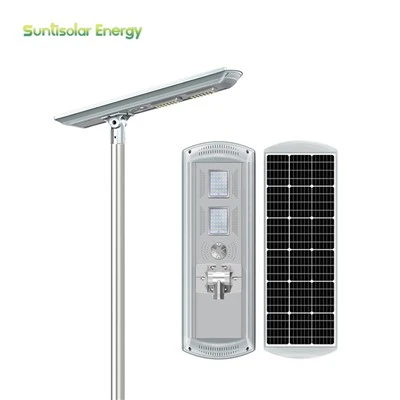
First, let’s make sure we’re all on the same page about what an All In One (AIO) Solar Street Light actually is. Unlike traditional solar setups that split components—solar panels, charge controllers, batteries, and LED fixtures each in their own box, wired together through concrete trenches or wall mounts—AIO units integrate every single part into one single, weatherproof housing. That means no messy wiring, no risk of loose connections corroding in rain or snow, and a self-contained system that’s engineered to work in tandem from day one. The core components are still the same high-efficiency monocrystalline solar panels, lithium iron phosphate (LiFePO4) batteries (way more reliable than old lead-acid ones), smart charge controllers, and durable LED bulbs—but they’re all built to talk to each other automatically.
For residential areas, the biggest win here is the installation simplicity. Traditional solar path lights or wall-mounted solar lights often suffer from mismatched components: a cheap panel that doesn’t pull enough charge, a battery that dies after two years, or a bulb that flickers because the voltage isn’t regulated properly. AIO lights eliminate that guesswork. When I supply units to a family putting lights along their driveway, their son doesn’t need to run wiring through the yard or hire an electrician to bury conduit. They just pick a spot with 6 to 8 hours of direct sunlight a day, mount the 10-pound pole (we send pre-drilled brackets that screw into a concrete pad or even a sturdy fence post), and flip the switch. Most of our residential AIO models take less than an hour to install, compared to 4 to 8 hours for traditional setups. That’s not just a convenience—it cuts installation costs by 70% or more, which is a huge plus for homeowners on a budget.
But let’s get to the real question: do they work for residential needs? Let’s compare their performance against what most homeowners actually need. A typical residential property doesn’t need 1000-watt lights to light a 5-lane highway. For driveways, backyards, walkways, or porch extensions, our residential AIO models range from 5 watts up to 40 watts of LED output. A 10-watt AIO light, for example, produces the same amount of light as a 75-watt incandescent bulb—bright enough to light a 15-foot driveway segment or a 20×20 foot back patio, no harsh glare like old street lights. The smart controllers add another layer of reliability here: unlike basic solar lights that turn on at full brightness as soon as the sun sets, AIO models have built-in light sensors and sometimes motion sensors. That means they dim to 20% brightness at midnight, then ramp up to full brightness when movement is detected, saving battery power. In areas with cloudy winter weeks, our most efficient residential models (with 20,000 mAh LiFePO4 batteries) can run for 7 to 10 consecutive days without direct sunlight—something I’ve tested myself with a unit I installed at my sister’s house in Michigan, where she gets barely 5 hours of sun a day in December.
Wait, but what about the myth that AIO lights are too bulky for residential yards? I get that one all the time. A lot of people picture the tall, 20-foot poles you see on main roads, which are obviously too big for a suburban front yard. But here’s something most people don’t know: AIO solar light poles come in heights from 3 feet (for porch or deck mounts) up to 12 feet, and all the small, residential models fit easily into standard landscaping. The 6-foot pole model for driveways, for example, is narrow enough to plant between two rose bushes or line along the edge of a walkway without overwhelming small front yards. I’ve supplied units to a homeowner in Texas who uses three 5-foot AIO lights to line her small side yard, and she says they’re barely noticeable during the day, but light up the path so well she doesn’t need her flashlight when letting her kids out after dark.
Another big factor for residential areas is cost, both upfront and long-term. A lot of homeowners assume AIO street lights are way more expensive than regular solar path lights, but that’s not true when you add up all the costs. A set of four basic solar path lights at a big box store costs around $50 total, but most of those fail after 1 to 2 years because of bad battery connections or low-quality panels, and they need to be replaced. A 5-watt residential AIO light from our company costs about $80 each, and they have a 5-year warranty on all components. When you compare the long-term costs: no electric bills (unlike wired lights, which cost $100 to $200 a year on power), no maintenance (no wiring to fix, no batteries to replace for 7 to 10 years, since LiFePO4 batteries last 2,000+ charge cycles), and installation costs that are nearly zero (no electrician needed). For a homeowner with a 100-foot driveway, that’s 8 to 10 AIO lights, total upfront cost around $800, with zero ongoing costs for at least a decade. That’s a way better deal than wired lights, which would cost $2,000+ to install and hundreds a year in power.
But AIO lights aren’t just for driveways and walkways—they work for a lot of other residential uses too. I recently helped a property manager for a small apartment complex in Florida switch all their common area lights to AIO models. Before, they had wired flood lights that drew power from the complex’s main grid, leading to frequent blackouts during summer storms and high electric bills. The AIO lights they installed along the parking lot edges, the path to the pool, and the trash pickup area run entirely on solar, work through power outages, and have motion sensors that turn on bright when someone walks by, saving battery. For small businesses with residential space, like a home-based bakery or a guesthouse rental, AIO lights make sense too—no need to pull permits for electrical work, no ongoing utility costs, and they’re reliable even in remote areas where running power lines would be expensive.
Of course, no product is perfect, and AIO solar lights aren’t a one-size-fits-all solution. There are a few things homeowners need to know before making the switch. First, they need enough direct sunlight. If your backyard is completely shaded by trees or a tall apartment building that blocks sunlight most of the day, even the most efficient AIO light won’t work well. We always recommend checking sun exposure for at least 3 days before ordering—if a spot gets less than 4 hours of direct sunlight a day, a traditional wired light or a larger commercial-grade AIO model with a bigger panel might be a better fit. Second, for homeowners in areas with extremely harsh weather, like frequent hurricanes or blizzards, it’s important to pick a model rated for that. All our AIO residential lights are IP65 waterproof (meaning they’re completely protected from rain, snow, and dust) and have poles that are rated to handle 60 mph winds, but we do suggest using a concrete base instead of a ground mount for areas with 80+ mph winds. Third, while AIO lights have long lifespans, the LED bulbs can be replaced after 10 to 12 years, which is way cheaper than replacing the whole unit, but it’s something to keep in mind.
I’ve also heard concerns about the quality of cheap AIO lights from overseas suppliers. As someone who’s worked in this industry for years, I can say that not all AIO lights are created equal. We supply units that use UL-listed components, tested for performance in all climates, and backed by a local support team, but there are a lot of unbranded lights that use low-quality panels and batteries that die after a year. That’s why it’s important to buy from a reputable supplier that offers warranties and product testing data, not just the cheapest price. For residential use, you don’t want a light that will go dark after the first bad storm.
Let me wrap this up with a real example that might make it concrete. Last year, I worked with a couple in Chicago, Mike and Lisa, who had a small backyard and a side walkway that was too dark at night, making them nervous for their 7-year-old dog to go out. They’d tried basic solar path lights, but they’d die by mid-October when the days got short. We installed two 10-watt AIO lights: one along the walkway (mounted on a 6-foot pole) and one near the back patio. They paid around $150 total for the lights, installed them in 45 minutes, and so far, they’ve worked every day for 12 months—even through Chicago’s snowy, cloudy December and January. Last month, Mike sent me a text saying their dog now uses the path every night without a flashlight, and they haven’t paid a dime for power or maintenance.

So back to the original question: can All In One Solar Street Lights be used for residential areas? The short answer is a resounding yes—if you pick the right model for your space, install it in a sunny spot, and work with a reputable supplier. They’re simpler to install, cheaper long-term, more reliable in many cases, and just as bright as traditional lights for residential needs. They’re not just for highways anymore—they’re perfect for driveways, walkways, backyards, common areas, and small rental properties.
Rural Road Stand Alone Solar Street Light If you’re a homeowner, property manager, or small developer looking to switch to solar-powered lighting for your residential space, I’d be happy to walk you through the best model for your specific needs. We can go over sun exposure in your yard, pole heights, warranty details, and answer any questions you have. No hard sales pitch, just honest advice from someone who’s installed these lights in hundreds of residential spaces over the years. Feel free to reach out to our team to start the conversation about finding the right AIO solar lights for your home or property.
References
- International Energy Agency. (2022). Solar for Residential Applications: Technology Performance and Market Trends.
- U.S. Department of Energy. (2021). Lithium-Ion Battery Lifespan and Performance for Off-Grid Solar Systems.
- North American Electrical Manufacturers Association. (2023). Specification for Integrated Solar Lighting Systems for Outdoor Residential Use.
- Solar Energy Industries Association. (2022). Cost-Benefit Analysis of All-In-One Solar Lighting for Small-Scale Properties.
- International Electrotechnical Commission. (2021). IP Rating Standards for Outdoor Lighting Products.
Yantai Xutai New Energy Technology Co., Ltd.
Yantai Xutai New Energy Technology Co., Ltd. is one of the most professional high way all in one solar street light manufacturers and suppliers in China. With a professional production team, we are able to meet the needs of the majority of our customers. Please rest assured to buy premium high way all in one solar street light made in China here from our factory.
Address: No.229, Tongshinan Road, Zhifu District, Yantai City, Shandong Province, China
E-mail: Joe.chu@suntisolar.com
WebSite: https://www.suntisolar.com/
