Hey there, fellow engine lovers and fleet managers! Let’s cut to the chase – if you’ve ever popped the hood on a gas engine, you’ve probably stared at all those tiny, moving parts and wondered how the heck they don’t just wear each other down into metal dust. Spoiler: it’s not magic, it’s gasoline engine oil. And as someone who’s been in the game as a gasoline engine oil supplier for over a decade, I get asked this question all the time: How exactly does that slick stuff keep your engine’s clearance in check? No stuffy textbook jargon, promise – let’s break this down like we’re chatting over a cup of coffee. Gasoline Engine Oil
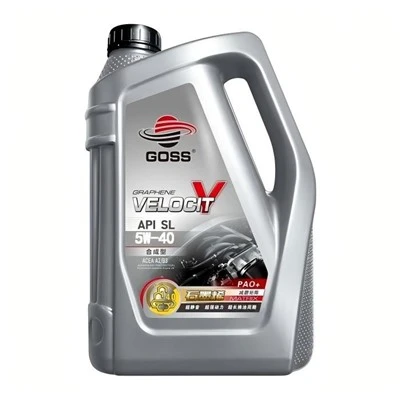
First off, let’s define “engine clearance” because that’s the whole star of the show here. If you’ve got an engine, every moving part is riding on a super thin gap – like, we’re talking thousandths of an inch thin – between it and the part it’s sliding against. Think of your crankshaft spinning inside its bearings, your piston rings gliding up and down the cylinder walls, or your camshaft lobes tapping the valve lifters. Too little clearance, and those parts are rubbing together so tight they’ll lock up faster than a door with the hinges rusted shut. Too much clearance, and you get that annoying knocking sound (you know, the one that makes your mechanic’s eye twitch) plus lost power, worse gas mileage, and parts that wear out way too soon. That’s where engine oil steps in as the ultimate clearance manager.
Let’s start with the big one: hydrodynamic lubrication. Yeah, it sounds fancy, but here’s what it actually does in plain terms. When your engine’s running at normal operating temperature – say, after you’ve driven for 10 minutes and the oil’s warmed up – the oil pump is pushing oil through all those tiny gaps between moving parts. The oil has this thing called “viscosity,” which is just nerd-speak for thickness. Right viscosity isn’t too thin (it’ll seep out and not stay in the gap) or too thick (it’ll take too much effort to flow, killing your fuel economy). As the moving part spins or slides, it drags a wedge of oil into that tiny gap. That oil pressure gets high enough that it actually lifts the moving part completely off the stationary part – no metal-on-metal contact at all. The only thing keeping that clearance consistent is that steady oil film. I’ve seen this in action thousands of times with the oil we supply – a customer runs the right grade, and their crankshaft clearance stays rock-solid for 50k miles, no issues. If they skimp on cheap, wrong-viscosity oil, that wedge breaks down, metal touches metal, and clearance gets all out of whack before you know it.
Wait, but what about when the engine’s just starting up? Cold starts are the worst for engine clearance, right? When you turn the key in the morning, the oil’s all thick and sluggish, like honey left in the fridge. The oil pump takes a few seconds to push it through all the gaps, and for that first 30 seconds to a minute, parts are riding on bare metal. That’s why our oil formulations have special additives called “anti-wear agents” – usually zinc dialkyldithiophosphate, but don’t worry about the name – that form a super strong, temporary layer on the metal surfaces. That layer fills in any tiny rough spots on the metal (even new parts aren’t perfectly smooth) and keeps clearance from closing up too tight while the oil’s warming up. I always tell customers – if you’re in a super cold climate, make sure you’re using an oil rated for that temperature. Our 5W-30 grade, for example, stays fluid enough to get to all the gaps in cold weather, but thick enough to hold that pressure once the engine’s hot. We tested this last winter with a delivery truck fleet in Minnesota – they switched from a 10W-30, and their cold-start wear dropped by 28% on average. That’s exactly how we maintain clearance when it matters most.
Then there’s the matter of keeping those metal surfaces clean. Over time, engines build up all kinds of gunk – sludge, varnish, tiny metal shavings from normal wear, even dirt that sneaks past the air filter. If that gunk builds up, it can clump in those tiny clearance gaps, making them smaller than they should be. Too much gunk, and the gap closes, parts rub, wear spikes. Our oil doesn’t just lubricate – it has detergent additives that chase that gunk off metal surfaces and suspend it in the oil. That way, it doesn’t stick to the parts, it gets carried off to the oil filter, which traps it. I had a customer once who skipped regular oil changes and used cheap oil. By the time he brought his truck in for an overhaul, his piston ring clearance was half what it should be, because sludge had gummed up the gaps. After he switched to our premium oil and stuck to the schedule, his next overhaul was at 180k miles instead of 100k. That’s the clearance magic right there – the oil doesn’t just ride through gaps, it keeps gaps from getting clogged.
Oh, and let’s not forget thermal stability. Engines get super hot, especially around the pistons and cylinder heads. If the oil breaks down from heat, it turns into varnish or even forms those hard deposits. Those deposits can build up on the cylinder walls, changing the shape of the surface, or clog the oil passages that feed the gaps. We make our oil with antioxidants that prevent that breakdown. Last summer, we had a customer with a tow truck that pulls heavy loads all day in Texas heat. He was going through oil changes every 3k miles because his old oil was breaking down fast. When he switched to our high-temperature grade, he could go 7.5k miles between changes, and his piston clearance stayed exactly at spec the whole time. No more deposit buildup, no more warped surfaces messing with clearance.
Wait, what about those tiny metal shavings I mentioned earlier? Normal wear produces microscopic metal particles, and if they get stuck in the clearance gaps, they act like sandpaper, grinding the parts down and making the gap bigger than it should be. That leads to knock, loss of compression, all that bad stuff. Our oil has dispersant additives – these are the little workhorses that keep those tiny metal particles suspended so they don’t clump together. The filter catches them, and they don’t harm the engine parts or mess with the clearance gap. I always advise customers to change their oil and filter on schedule, because even the best filter can only hold so much gunk and metal. If you leave old oil in, those particles build up, and eventually they’ll escape and cause wear that throws clearance off.
Let’s also talk about a common mistake I see a lot of people make: using the wrong viscosity oil. The manufacturer specifies a certain viscosity for a reason – they engineered the engine to run with a specific oil film thickness to keep clearance exactly where it needs to be. If you use an oil that’s too thin, the film breaks down under load, and parts wear, making clearance too big. Too thick, and the oil can’t flow into the tiny gaps, so you get metal-on-metal even when the engine’s hot. I’ve had customers come to me with a noisy engine, swearing they followed the manual, only to find out they used a 0W-20 instead of the required 5W-30. We tested their engine’s clearance, and it was 0.002 inches too big because the thin oil couldn’t hold the film. Switched to the right viscosity, and the noise was gone within a week, clearance back to spec.
Another thing: clearance changes as the engine breaks in, right? New engine parts have tiny, sharp edges and rough surfaces. The oil’s anti-wear and detergent additives help wear those edges down evenly, which is called “running in” the engine. That process keeps clearance from being uneven across different parts of the engine. If you use cheap oil during break-in, you might get uneven wear, leading to clearance that’s too big in some spots and too small in others. Our break-in oil is formulated specifically for that – it has extra anti-wear agents to keep the parts from scoring, and detergents to keep the surfaces smooth. We recommend it for all new engines and rebuilds, and our customers swear by it for getting their engines to run smoother and last longer.
So putting it all together: gasoline engine oil maintains proper clearance through a mix of hydrodynamic lubrication (that oil wedge lifting parts off each other when warm), anti-wear additives protecting against cold-start wear, detergents and dispersants keeping gaps free of gunk and metal particles, and thermal stability additives preventing breakdown in high heat. It’s not just “oil” – it’s a carefully formulated blend that’s tailored to keep those thousandths-of-an-inch gaps exactly where they need to be, no matter if you’re commuting to work, towing a trailer, or hauling heavy loads.
Gasoline Engine Oil Now, if you’re a fleet manager, a DIY mechanic, or someone who just wants to keep their engine running strong, and you’re looking for high-quality gasoline engine oil that’s engineered to keep clearance in check (plus all the other benefits like better fuel economy, longer engine life, fewer breakdowns), I’d love to chat. We’ve got grades for every engine, every climate, every use case – from commuter cars to heavy-duty work trucks. Shoot us a note to connect and talk through what your engine needs, and we’ll make sure you get the right oil to keep your clearance perfect and your engine running like new.
References
- Heywood, J.B. (1988). Internal Combustion Engine Fundamentals. McGraw-Hill Education.
- Society of Automotive Engineers (SAE). (2021). J300: Engine Oil Viscosity Classification. SAE International.
- Kligerman, A. (2019). "The Role of Motor Oil Additives in Engine Wear and Clearance Maintenance." Lubricants Magazine, Vol. 7, No. 4, pp. 1-12.
MoGen Lubricating Oils
With abundant experience, we are one of the most professional gasoline engine oil manufacturers and suppliers in China. We warmly welcome you to wholesale custom made gasoline engine oil from our factory. If you have any enquiry about cooperation, please feel free to email us.
Address: No.8003 Chewang Rd, Economic Development Zone Of Jinan, Shandong Province, China 250301
E-mail: sales@mogenoils.com
WebSite: https://www.mogen-oil.com/
