As a professional gear supplier, I’ve faced numerous inquiries from customers about the maximum speed a gear can handle. This topic is crucial not only for engineers designing high – performance machinery but also for businesses aiming to optimize their operations. In this blog, we’ll delve into the factors influencing a gear’s maximum speed and how to determine it accurately. Gear
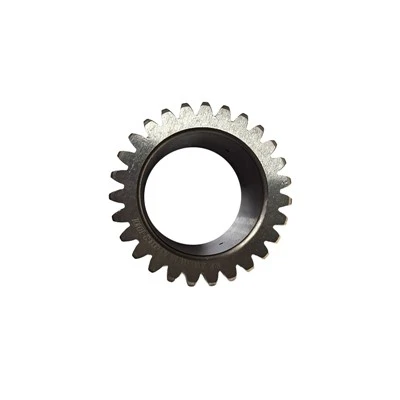
Factors Affecting a Gear’s Maximum Speed
1. Material Properties
The material from which a gear is made has a significant impact on its maximum speed. Different materials have varying strength, hardness, and heat – dissipation capabilities. For instance, steel is a commonly used material for gears due to its high strength and wear resistance. High – carbon steels can withstand higher stresses and can be used in high – speed applications. However, the surface finish of the steel gear also plays a role. A smooth surface reduces friction, which in turn reduces heat generation at high speeds.
Aluminum gears are lighter, which can be an advantage in some applications where weight reduction is critical. But they have lower strength compared to steel, and their maximum speed is often limited by their ability to withstand the centrifugal forces and stress at high rotational velocities.
2. Gear Design
The design of the gear, including its tooth profile, pitch, and helix angle, affects its high – speed performance. A well – designed tooth profile ensures smooth meshing between gears, reducing noise and vibration at high speeds. For example, involute tooth profiles are widely used in high – speed gears because they provide constant velocity ratio and smooth engagement.
The pitch of the gear, which is the distance between corresponding points on adjacent teeth, also matters. A finer pitch may allow for smoother operation at high speeds, but it may also have limitations in terms of load – carrying capacity.
The helix angle of a helical gear can have a positive impact on high – speed operation. Helical gears have teeth that are cut at an angle to the axis of rotation, which allows for more gradual tooth contact. This results in quieter operation and can handle higher speeds compared to spur gears, which have straight teeth.
3. Lubrication
Lubrication is essential for high – speed gear operation. A proper lubricant reduces friction between the gear teeth, which in turn reduces heat generation and wear. In high – speed applications, the lubricant must have good viscosity – temperature characteristics. As the temperature rises due to high – speed operation, the viscosity of the lubricant should not change significantly to maintain proper film thickness between the gear teeth.
There are different types of lubricants available, such as mineral oils, synthetic oils, and grease. The choice of lubricant depends on the specific requirements of the application, including the maximum speed, load, and operating environment. For example, synthetic lubricants are often preferred in high – speed and high – temperature applications due to their superior thermal stability.
4. Bearings and Mounting
The quality of the bearings used to support the gears and the way the gears are mounted also influence the maximum speed. High – quality bearings with low friction and high – speed ratings are necessary for smooth gear operation at high speeds. The mounting of the gears should be precise to ensure proper alignment. Any misalignment can lead to uneven loading on the gear teeth, increased vibration, and reduced maximum speed.
Determining the Maximum Speed of a Gear
There isn’t a one – size – fits – all formula to calculate the maximum speed of a gear. Instead, engineers use a combination of theoretical calculations and empirical data.
1. Theoretical Calculations
One of the key theoretical considerations is the centrifugal force acting on the gear. The centrifugal force (F_c=m\omega^{2}r), where (m) is the mass of the gear element, (\omega) is the angular velocity, and (r) is the radius of gyration. As the speed of the gear increases, the centrifugal force can cause excessive stress on the gear material, leading to deformation or failure.
The bending stress and contact stress on the gear teeth also need to be calculated. The Lewis equation is commonly used to calculate the bending stress in gear teeth, and the Hertzian contact stress theory is used to calculate the contact stress. These calculations help in determining the safe operating speed based on the material properties and gear dimensions.
2. Empirical Data and Testing
In addition to theoretical calculations, empirical data from previous tests and similar applications are invaluable. Manufacturers often conduct extensive testing on their gears to determine their maximum speed capabilities under different conditions. This testing includes running the gears at various speeds and loads while monitoring factors such as temperature, vibration, and wear.
By analyzing the test results, manufacturers can establish speed limits for their gears and provide guidelines to customers. These guidelines take into account not only the mechanical properties of the gears but also the overall system requirements, such as the acceptable level of noise and vibration.
Industry Examples
Let’s take a look at some examples from different industries. In the aerospace industry, gears used in aircraft engines need to operate at extremely high speeds. For example, the accessory drive gears in a jet engine may rotate at speeds of up to 40,000 RPM. These gears are made from high – strength alloy steels and are designed with precision to ensure smooth operation. The lubrication systems in these applications are highly advanced, with sophisticated oil circulation systems to maintain proper lubrication and cooling.
In the automotive industry, transmission gears are subjected to a wide range of speeds. Manual transmissions often have gears that can handle speeds up to 8,000 – 9,000 RPM. The design of these gears focuses on durability, smooth shifting, and noise reduction. Automobile manufacturers use advanced manufacturing techniques, such as precision machining and heat treatment, to enhance the performance of their gears.
Our Role as a Gear Supplier
As a gear supplier, we understand the importance of providing high – quality gears that can meet the maximum speed requirements of different applications. We work closely with our customers to understand their specific needs, including the operating environment, load requirements, and speed expectations.
Our team of experienced engineers uses state – of – the – art design and manufacturing technologies to produce gears that are optimized for high – speed operation. We conduct thorough quality control checks at every stage of the manufacturing process to ensure that our gears meet or exceed industry standards.
We also offer technical support to our customers. If you have questions about the maximum speed of a gear for your application, our engineers are ready to provide expert advice. We can help you with gear selection, lubrication recommendations, and installation guidance.
Contact Us for Your Gear Needs
Transmission Shaft If you’re in the market for high – quality gears that can handle the speeds required by your application, we’d love to hear from you. Whether you’re an engineer working on a new project or a business owner looking to upgrade your machinery, we have the expertise and the products to meet your needs. Contact us to start a conversation about your gear requirements, and let’s work together to find the best solution for you.
References
- Dudley, D. W. (1984). Dudley’s Gear Handbook: Design, Manufacturing, and Application. McGraw – Hill.
- Townsend, D. P. (1992). Dudley’s Gear Handbook, Volume 2: Design, Manufacturing, and Application. Marcel Dekker.
- Buckingham, E. (1988). Analytical Mechanics of Gears. Dover Publications.
Yancheng Botu Transmission Machinery Co., Ltd.
As one of the most professional gear manufacturers and suppliers in China, we have world-leading production equipment and strong manufacturing capabilities. Please rest assured to wholesale cheap gear for sale here from our factory. Contact us for more details.
Address: No. 33, Yongxing Road, Economic Development Zone, Jianhu County, Yancheng City, Jiangsu Province
E-mail: 15261979878@163.com
WebSite: https://www.ycbtcdjx.com/
