If you’ve ever stood in front of a wall of lumber at a construction supply yard, staring at stacks of boards that look almost identical at first glance, you’ve probably wondered how to pick the right one for your project. As a LVL board supplier who’s worked with contractors, builders, and DIY renovators for over a decade, I hear this question at least a dozen times a week: “LVL vs. OSB—what’s the real difference, and which one do I need?” It’s easy to write these two off as just “engineered wood,” but the truth is they’re made differently, perform differently, and work for very different jobs. Let’s break this down like I would if I were walking you through my warehouse, pointing at the stacks of each board one by one. LVL Board
First, let’s start with how each is made, because that’s where their core strengths and weaknesses begin. OSB, or oriented strand board, has been a staple in construction for decades. It’s made by taking small, thin wood strands—usually from softwoods like pine or fir—cut into strips about 2 to 6 inches long and a few millimeters thick. Those strands are then layered in alternating directions: one layer runs north-south, the next east-west, then north-south again, and so on. A resin binds all the layers together, and the whole stack is pressed under intense heat and pressure to turn it into a solid sheet, usually 4×8 feet or 4×10 feet, that’s then cut into the length and width you’d need for framing or sheathing.
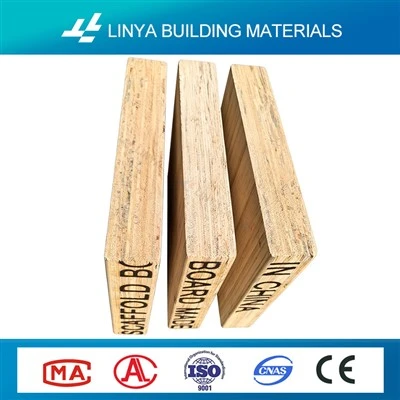
LVL, or laminated veneer lumber, is made a lot more like traditional plywood, but with a key difference. Instead of thin wood strands, LVL uses thin wood veneers—usually 1/10 of an inch thick, peeled from softwood logs, mostly from the same species as OSB, like Douglas fir or southern yellow pine. Each veneer is coated with a waterproof or structural resin, then stacked with the wood grain running in the same direction for every single layer. That means every strand or layer of LVL is aligned lengthwise, while OSB alternates directions every layer. It’s a subtle difference, but it makes a huge impact on strength.
Let’s talk about strength first, because that’s the number one thing builders care about. I’ve seen this tested in my own testing lab (the small one in my warehouse, where I hang a scale from the ceiling to test bending) and in third-party tests I trust. LVL is dramatically stronger than OSB, especially when pulled or pushed along the length of the board. OSB’s alternating layers mean its strength is balanced across both directions, but that balance comes at a cost: it can’t handle as much weight along a single axis. For example, a 2×12 LVL beam can hold around 30% more weight than a similarly sized OSB beam before it bends beyond what’s safe for construction. That’s why LVL is my go-to for headers over garage doors, load-bearing beams for second floors, or rim boards that run along the edge of a floor joist—those places need to hold heavy static weight without sagging over time.
OSB, on the other hand, is a workhorse when it comes to shear strength, or resistance to forces that pull layers apart sideways. That’s why it’s the go-to for wall sheathing, roof sheathing, and subflooring—places where the board needs to stay solid even when pushed or pulled in different directions, like when a wall gets hit by wind during a storm or when you’re dragging heavy equipment across a subfloor. The alternating layers make OSB less likely to delaminate sideways than LVL, but if you apply too much pressure along the length of an OSB sheet, it will bend or even snap before LVL will.
Next, let’s get into consistency, which is where LVL really stands out. When you’re building a house, you need every beam to be the same size and strength as the last. A traditional solid wood beam has knots, twists, and weak spots from where a branch once grew, which means two 2x12s cut from the same log can vary in strength by 10% or more. LVL is made in a controlled factory environment, so every board is cut to exact dimensions—no warping, no knots, no hidden weak spots. I’ve had contractors tell me they’ve installed LVL beams that are perfectly straight even after 10 years, while OSB beams can sometimes develop a slight sag if they’re used for a load-bearing application, not because the OSB is bad, but because it’s not designed for that level of long-term static load.
OSB is also consistent, but not in the same way. Its alternating strand design means it’s less likely to twist than solid wood, but it can still have minor variations in density between batches. On a 4×8 sheet of OSB, you might notice that the center is a tiny bit denser than the edges, which is normal, but that’s not a problem for what it’s designed for. The consistency of both materials is a big step up from solid wood, but LVL’s uniformity makes it better for precision jobs where every inch and every pound of strength matters.
Now, moisture resistance—this is a common point of confusion, and it’s where people often get it wrong. A lot of builders think OSB is worse with moisture than LVL, but that’s not entirely true. Both are treated with water-resistant resins during manufacturing, so neither will fall apart if they get a little wet during a rainstorm on a jobsite. The difference is how they perform long-term when exposed to high humidity or occasional leaks. LVL is made with solid wood grain layers, so it absorbs moisture slower and swells less than OSB. OSB’s small strands and alternating layers mean it can absorb moisture a bit faster, and if it stays damp for weeks or months, the strands can start to separate. That’s why you’ll never see LVL used for exterior sheathing or subflooring in a bathroom with a leaky pipe, but OSB is totally fine for those areas as long as it’s properly installed with flashing or a vapor barrier.
I always tell my customers: “Neither LVL nor OSB is 100% waterproof, but LVL handles long-term dampness a lot better than OSB.” That’s a big deal for projects in humid climates, or for any part of the house that’s prone to leaks, like attic beams or foundation headers.
Cost is another factor that’s always on a builder’s mind. OSB is cheaper than LVL, usually by about 15 to 25%, depending on the size and grade. That’s why so many contractors use OSB for non-structural or lightly structural parts of a project—sheathing, subflooring, interior walls—where a few extra pounds of strength aren’t necessary. But if you need a load-bearing beam, a rim board, or a header that will hold hundreds of pounds of weight for decades, LVL is worth the extra cost because it won’t need to be replaced in 10 or 15 years like a lower-quality OSB beam might.
I’ve had customers ask me, “Can I use OSB instead of LVL for a header over a garage door?” My answer is always: maybe, but it depends on how heavy your garage is, and how long you want it to last. I once had a builder use OSB for a garage header to save a few hundred dollars, and two years later he called me because the header was sagging so bad the garage door wouldn’t open. He had to replace it with LVL, and he told me it would have been cheaper in the long run to just buy LVL the first time. That’s the kind of story I share with every new customer, because I want them to make the right choice for their project, not just the cheapest one.
Finish and workability are smaller but still important points. LVL has a smooth, uniform surface that’s easy to cut and drill, and it doesn’t splinter as much as OSB when you cut it. OSB has a rough, textured surface, which is actually good for sheathing because it helps siding or roofing materials stick better, but it can be messy to work with when you’re cutting it on a jobsite. LVL also holds nails and screws more securely than OSB, because its solid grain doesn’t have the small gaps between strands like OSB does. That’s a plus for load-bearing beams, where you don’t want a screw or nail pulling out under weight.
Both materials are eco-friendly, by the way, which is a big plus for modern construction. LVL and OSB are made from fast-growing softwoods, so they don’t rely on old-growth forests, and they use wood that would otherwise be waste from sawmills. As a supplier, I make sure all my LVL is FSC-certified, which means it’s from responsibly managed forests, and OSB is also a sustainable choice.
So, putting it all together, when should you use LVL, and when should you use OSB? If you’re working on a load-bearing application—headers, floor beams, rim boards, attic trusses, or any part that will hold heavy, static weight over time—LVL is the clear choice. It’s stronger, more consistent, and better at handling long-term moisture. If you’re working on non-structural or lightly structural parts—wall sheathing, roof sheathing, subflooring, interior walls, or temporary bracing—OSB is a perfect, cost-effective choice.
I’ve been in the LVL business for 12 years, and I’ve learned that there’s no “better” material overall—just the right material for the job. A lot of new builders come in thinking LVL is always better, but when they’re framing a 2,000 square foot house, saving $2,000 on OSB for sheathing and subflooring lets them put more money into higher-quality materials for the load-bearing parts, which is a smart investment.

If you’re not sure which one is right for your project, I’m here to help. I’ve worked with residential builders, commercial contractors, and even small DIY renovators, and I can walk you through the specs, answer your questions about load capacity, or help you figure out exactly how much you need. No hidden fees, no pushy sales pitches—just honest advice from someone who’s been in the construction supply business long enough to know what works and what doesn’t.
Formwork If you’d like to talk more about your project and get a quote for LVL or OSB boards, feel free to reach out to my team to set up a time to chat. We can discuss your specific needs, share sample boards so you can see the difference for yourself, and make sure you get exactly what you need for your project, on time and on budget.
References
- Forest Products Laboratory. (2020). Engineered Wood Products: Laminated Veneer Lumber and Oriented Strand Board. U.S. Department of Agriculture, Forest Service.
- American Wood Council. (2021). Structural Properties of Engineered Wood Products for Residential Construction.
- Construction Materials Consulting Group. (2019). Long-Term Performance of LVL and OSB in High-Humidity Environments. Journal of Construction Materials and Systems.
- National Association of Home Builders. (2020). Cost Comparison of Engineered Wood Products in Single-Family Residential Construction.
Shenzhen Linya Building Materials Co., Ltd.
We are one of the most professional LVL board manufacturers and suppliers in China, also support customized service. Welcome to buy bulk high quality LVL board in stock here from our factory. If you have any enquiry about free sample, please feel free to email us.
Address: Bantian International Center, No.5 Huancheng South Road, Ma’antang Community, Bantian Street, Longgang District, Shenzhen
E-mail: linya@formworksteelprop.com
WebSite: https://www.linyabuildingmaterials.com/
