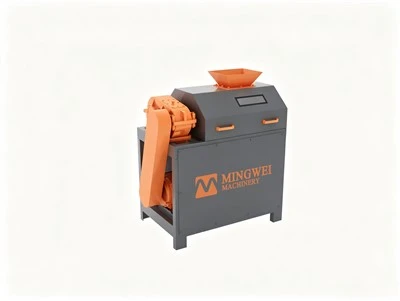
Fermentation composting is an eco – friendly and efficient way to transform organic waste into valuable compost. As a provider of fermentation compost equipment, I’ve witnessed firsthand how the process works and, more importantly, how our equipment effectively manages the gas produced during composting. Fermentation Compost Equipment
The Composting Process and Gas Generation
Before delving into how our equipment handles gases, it’s essential to understand the composting process. Composting is a natural biological process where microorganisms break down organic materials such as food scraps, yard waste, and manure under aerobic (oxygen – rich) conditions. During this process, various chemical reactions occur, and gases are inevitably produced.
The primary gases generated in composting include carbon dioxide (CO₂), methane (CH₄), ammonia (NH₃), and hydrogen sulfide (H₂S). Carbon dioxide is a by – product of the respiration of aerobic microorganisms. These microorganisms consume oxygen and break down organic matter, releasing energy and carbon dioxide in the process. Methane is produced in anaerobic (low – oxygen) zones within the compost pile. Anaerobic bacteria break down organic matter in the absence of oxygen, and methane is one of the end – products. Ammonia is released when nitrogen – containing organic compounds, such as proteins, are decomposed. Hydrogen sulfide is formed from the breakdown of sulfur – containing organic materials.
The Significance of Gas Management
Managing the gases produced during composting is not just about environmental protection; it also has a direct impact on the quality of the compost and the overall efficiency of the process.
From an environmental perspective, methane is a potent greenhouse gas, with a much higher global warming potential than carbon dioxide. Releasing large amounts of methane into the atmosphere contributes to climate change. Ammonia is a major air pollutant that can cause respiratory problems in humans and animals and also plays a role in the formation of particulate matter and acid rain. Hydrogen sulfide has a foul smell and can be toxic at high concentrations.
In terms of the composting process itself, excessive gas production can indicate an imbalance in the compost pile. For example, high methane production may suggest anaerobic conditions, which slow down the decomposition rate and can lead to the production of malodorous compounds. Effective gas management helps maintain aerobic conditions, ensuring that the composting process progresses smoothly and efficiently, resulting in high – quality compost.
Our Fermentation Compost Equipment’s Gas – Handling Mechanisms
Aeration System
One of the key components of our fermentation compost equipment is the aeration system. The aeration system is designed to supply a sufficient amount of oxygen to the compost pile, promoting aerobic decomposition and reducing the formation of anaerobic zones where methane is produced.
Our equipment uses a combination of forced – air and passive – air aeration. Forced – air aeration is achieved through blowers that pump air into the compost pile. The air is distributed evenly through a network of pipes within the composting chamber. This constant supply of oxygen not only suppresses methane production but also enhances the activity of aerobic microorganisms, accelerating the decomposition process.
Passive – air aeration is also incorporated into the design. The composting chamber is built with ventilation channels that allow natural air movement. This helps remove the carbon dioxide produced during aerobic decomposition and replenishes oxygen. The combination of forced – air and passive – air aeration ensures that the compost pile remains aerobic throughout the process.
Gas Collection and Treatment
We understand that even with proper aeration, some gas production is inevitable. That’s why our fermentation compost equipment is equipped with a gas collection and treatment system.
The gas collection system consists of a series of ducts and fans that capture the gases released from the compost pile. The collected gases are then transported to the treatment unit. In the treatment unit, different methods are used to deal with different types of gases.
For carbon dioxide, which is a relatively harmless gas, it is usually released into the atmosphere after passing through a filtering system to remove any particulate matter. Methane, on the other hand, is a valuable energy source. Our equipment can be optionally configured with a methane recovery system. In this system, the methane is separated from other gases and can be used as biogas for heating, electricity generation, or other energy – related applications.
To deal with ammonia and hydrogen sulfide, we use scrubbers. Scrubbers work by passing the gas through a liquid solution that reacts with the ammonia and hydrogen sulfide. For example, an acidic solution can be used to neutralize ammonia, while an oxidizing solution can be used to convert hydrogen sulfide into less harmful substances. This not only reduces the odor but also ensures that these pollutants are not released into the environment.
Monitoring and Control
Our fermentation compost equipment is also equipped with a monitoring and control system to ensure the effective management of gas production. Sensors are installed throughout the composting chamber to measure parameters such as oxygen content, temperature, and gas concentrations.
The data collected by these sensors is transmitted to a central control unit. The control unit uses this data to adjust the operation of the aeration system, gas collection system, and treatment unit in real – time. For example, if the oxygen content in the compost pile drops below a certain level, the control unit will increase the airflow from the blowers to maintain aerobic conditions. If the concentration of ammonia or hydrogen sulfide exceeds a set limit, the control unit will adjust the operating parameters of the scrubbers to ensure effective treatment.
Case Studies
Over the years, we have installed our fermentation compost equipment in various facilities, including agricultural farms, municipal waste treatment plants, and industrial composting sites. Here are a few examples of how our equipment has handled gas production effectively.
In an agricultural farm, the customer was dealing with a large amount of livestock manure. Before using our equipment, the manure pile was producing a strong odor, and there were concerns about methane emissions. After installing our fermentation compost equipment, the aeration system maintained aerobic conditions in the compost pile. The gas collection and treatment system captured and treated the ammonia and hydrogen sulfide, significantly reducing the odor. The methane recovery system also managed to collect a substantial amount of methane, which was used to power the farm’s heating system.
In a municipal waste treatment plant, the equipment was used to compost organic waste from the city. The large – scale composting operation initially faced challenges with gas emissions, especially ammonia and hydrogen sulfide. Our monitoring and control system quickly identified the problem areas, and the gas treatment unit was adjusted accordingly. As a result, the gas emissions were brought within the environmental standards, and the quality of the compost produced was improved.
Conclusion

As a fermentation compost equipment supplier, we are committed to providing high – quality solutions that not only transform organic waste into valuable compost but also effectively manage the gas produced during the composting process. Our equipment’s aeration system, gas collection and treatment system, and monitoring and control system work together to ensure a clean, efficient, and environmentally friendly composting process.
Crushing and Grinding Machines If you are looking for reliable fermentation compost equipment that can handle gas production effectively, we are here to help. Our team of experts can provide you with detailed information about our products and customize solutions to meet your specific needs. Whether you are a small – scale farmer or a large – scale waste management facility, we have the right equipment for you. Contact us today to start a discussion about your composting requirements and how our equipment can benefit your operation.
References
- Epstein, E. (2002). The Science of Composting. Technomic Publishing Company, Inc.
- Tchobanoglous, G., Burton, F. L., & Stensel, H. D. (2003). Wastewater Engineering: Treatment and Reuse. McGraw – Hill.
- Rynk, R., et al. (1992). On – Farm Composting Handbook. NRAES – 54.
Henan Mingwei Machinery Equipment Co., Ltd.
As one of the most experienced fermentation compost equipment manufacturers in China, we have world-leading production equipment and strong manufacturing capabilities. Please rest assured to buy durable fermentation compost equipment for sale here from our factory. For price consultation, contact us.
Address: No.461 Qudong Jinsui Avenue, Hongqi District, Xinxiang City, Henan Province, China
E-mail: info@hnmwm.com
WebSite: https://www.hnmwmequip.com/
