Yo, what’s up everyone! I’m a supplier of graphitized petroleum coke, and I’ve been in this game for quite some time. One question I get asked a lot is how to test the quality of graphitized petroleum coke. Well, I’m here to break it down for you in simple terms. Graphitized Petroleum Coke

First off, let’s talk about why testing the quality is so important. Graphitized petroleum coke is used in a whole bunch of industries, like aluminum smelting, steelmaking, and even in the production of batteries. The quality of the coke can have a huge impact on the efficiency and quality of the end product. So, making sure you’re getting high – quality stuff is crucial.
Physical properties testing
One of the first things you wanna look at is the physical properties. Density is a biggie. You can measure the density using a simple technique. Just take a known volume of the graphitized petroleum coke and weigh it. Then calculate the density by dividing the mass by the volume. A higher density often indicates a more compact and higher – quality coke. Most of the time, a density of around 2.2 – 2.3 g/cm³ is considered good.
Particle size distribution is also super important. We use a sieve shaker for this. You take a sample of the coke and pass it through a series of sieves with different mesh sizes. Then you measure the amount of coke that stays on each sieve. The right particle size distribution depends on the application. For example, in aluminum smelting, you might want a more uniform particle size to ensure better performance.
Another physical property is the hardness. You can test the hardness using a Mohs hardness scale or a more advanced hardness testing machine. A harder coke is generally better because it’s less likely to break down during handling and use.
Chemical composition analysis
The chemical composition of graphitized petroleum coke is a key factor in determining its quality. Carbon content is the most important one. We usually use a carbon – sulfur analyzer to measure the carbon content accurately. High – quality graphitized petroleum coke should have a carbon content of at least 98%. A higher carbon content means better conductivity and less impurity.
Sulfur is an impurity that we need to keep an eye on. Excessive sulfur can cause problems in the production process, like corrosion of equipment. We use the same carbon – sulfur analyzer to measure the sulfur content. The sulfur content should be as low as possible, ideally less than 0.5%.
There are also other elements like ash, nitrogen, and hydrogen that we need to analyze. Ash content can be measured by burning a sample of the coke in a furnace at a high temperature until all the organic matter is burned off. Then you weigh the remaining ash. A low ash content is preferred, usually less than 0.5%.
Thermal properties testing
Thermal properties are also crucial, especially when the coke is used in high – temperature applications. Thermal conductivity is an important one. You can use a thermal conductivity meter to measure it. A higher thermal conductivity means the coke can transfer heat more efficiently, which is great for applications like steelmaking.
Another thermal property is the coefficient of thermal expansion. We use a dilatometer to measure how much the coke expands or contracts when heated. A low coefficient of thermal expansion is desirable because it means the coke won’t crack or break easily under temperature changes.
Electrical properties testing
Given that graphitized petroleum coke is often used in applications where electrical conductivity is important, testing its electrical properties is a must. We use a four – point probe method to measure the electrical resistivity. A low electrical resistivity indicates high electrical conductivity. For high – quality graphitized petroleum coke, the electrical resistivity should be very low, usually in the range of micro – ohm meters.
Performance testing in application
All the lab tests are important, but the real – world performance of the graphitized petroleum coke in its intended application is what really matters. For example, if it’s used in aluminum smelting, you can conduct a small – scale smelting test. Monitor the anode consumption, the current efficiency, and the quality of the aluminum produced. If the coke performs well in these tests, it’s a good sign of its quality.
Similarly, if it’s used in battery production, you can test the charge – discharge efficiency and the cycle life of the battery using the graphitized petroleum coke as an electrode material.
Now, I know all these tests might seem a bit overwhelming, but it’s worth it. As a supplier, I make sure that all our graphitized petroleum coke goes through a rigorous testing process before it reaches our customers. We use state – of – the – art equipment and have a team of experienced technicians to ensure the quality.
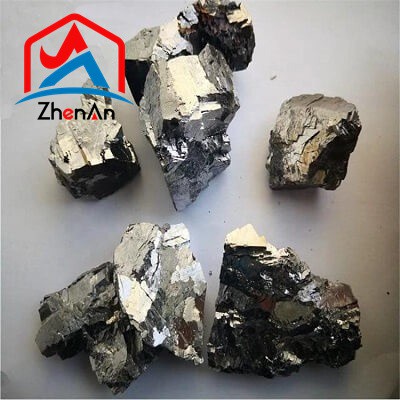
If you’re in the market for high – quality graphitized petroleum coke, don’t hesitate to reach out. We can work together to figure out the best product for your specific needs. Whether you’re in the aluminum industry, steelmaking, or battery production, we’ve got you covered. Just drop us a line, and we can start discussing your requirements. We’re always open to having a conversation and finding the best solutions for your business.
Ferro Silicon Zirconium References
- Handbook of Carbon Materials Testing Methods
- Journal of Applied Carbon Science
- Industry Standards for Graphitized Petroleum Coke Quality
ZhenAn International Co., Limited
ZhenAn International Co., Limited is one of the leading graphitized petroleum coke manufacturers and suppliers in China. We warmly welcome you to wholesale discount graphitized petroleum coke in stock here from our factory. All our products are with high quality and competitive price.
Address: Huafu Commercial Center, Wenfeng District, Anyang City, Henan Province, China
E-mail: info@zaferroalloy.com
WebSite: https://www.ferro-silicon-alloy.com/
