Hey there! I’m a supplier of CNC turning parts, and I’ve been in this game for quite a while. One of the most common challenges we face in CNC turning parts production is handling complex geometries. It’s not an easy task, but with the right approach, it can be done effectively. In this blog, I’ll share some tips and tricks on how to handle complex geometries in CNC turning parts production. CNC Turning Parts

Understanding the Complex Geometries
First things first, we need to understand what complex geometries are. Complex geometries refer to parts with intricate shapes, non – standard profiles, or multiple features that require precise machining. These can include parts with irregular curves, deep pockets, or angled surfaces.
When dealing with complex geometries, it’s crucial to have a clear understanding of the design requirements. We need to study the engineering drawings carefully to identify all the critical dimensions, tolerances, and surface finish requirements. This helps us plan the machining process more effectively.
Tool Selection
Selecting the right tools is key to handling complex geometries. For complex parts, we often need specialized cutting tools. For example, if we’re dealing with a part that has a lot of curves, ball – nose end mills can be a great choice. They can follow the contours of the curves smoothly and provide a good surface finish.
Another important factor in tool selection is the tool material. Carbide tools are commonly used in CNC turning because they are hard and can withstand high cutting speeds. However, for some complex geometries, we might need to use ceramic or diamond – coated tools, especially when dealing with hard materials like titanium or hardened steel.
We also need to consider the tool’s reach and clearance. In parts with deep pockets or internal features, we need tools that can reach the required areas without colliding with the workpiece. This might mean using long – reach tools or tools with special geometries.
Programming
Programming is where the magic happens when it comes to handling complex geometries. We use Computer – Aided Manufacturing (CAM) software to generate the toolpaths for our CNC machines. The CAM software allows us to create precise toolpaths that follow the complex shapes of the parts.
When programming for complex geometries, we need to pay attention to the feed rates, spindle speeds, and cutting depths. These parameters can have a significant impact on the quality of the machining. For example, if the feed rate is too high, it can cause excessive tool wear and poor surface finish. On the other hand, if the spindle speed is too low, it can increase the machining time.
We also need to use strategies like roughing and finishing. Roughing is used to remove the bulk of the material quickly, while finishing is used to achieve the final dimensions and surface finish. By separating these two processes, we can optimize the machining time and improve the quality of the parts.
Fixturing
Proper fixturing is essential for handling complex geometries. A good fixture holds the workpiece securely in place during the machining process, ensuring that the dimensions are accurate and the surface finish is consistent.
For complex parts, we might need custom – made fixtures. These fixtures are designed to fit the specific shape of the workpiece and provide support where it’s needed. For example, if we’re machining a part with an irregular shape, we can use a fixture with adjustable clamps or supports to hold the part firmly.
We also need to consider the accessibility of the workpiece. The fixture should allow the cutting tools to reach all the necessary areas without any interference. This might require us to design the fixture in a way that provides clear access to the part’s features.
Quality Control
Quality control is an important part of handling complex geometries. We need to ensure that the parts meet the design requirements and are free from defects.
We use a variety of inspection tools to check the dimensions and surface finish of the parts. Coordinate Measuring Machines (CMMs) are commonly used to measure the dimensions of the parts with high precision. We can also use optical inspection systems to check the surface finish and detect any defects.
During the machining process, we perform in – process inspections to catch any issues early. This allows us to make adjustments to the machining parameters if necessary. After the machining is complete, we perform a final inspection to ensure that the parts meet the customer’s specifications.
Cost – Efficiency
Handling complex geometries can be costly, but there are ways to make the process more cost – efficient. One way is to optimize the machining process. By using the right tools, programming strategies, and fixturing, we can reduce the machining time and tool wear.
We can also look for ways to reduce the material waste. For example, we can use nesting software to optimize the layout of the parts on the raw material, minimizing the amount of scrap.
Another cost – saving measure is to invest in high – quality tools. Although high – quality tools might be more expensive upfront, they can last longer and provide better performance, reducing the overall cost in the long run.
Real – World Examples
Let me share a real – world example of how we handled a complex geometry in CNC turning parts production. We had a customer who needed a part with a complex internal profile. The part had a series of angled surfaces and deep pockets, which made it challenging to machine.
First, we studied the engineering drawings carefully and identified all the critical dimensions and tolerances. Then, we selected the appropriate cutting tools. We used carbide ball – nose end mills for the curved surfaces and long – reach drills for the deep pockets.
Next, we programmed the CNC machine using CAM software. We used a combination of roughing and finishing strategies to remove the material efficiently and achieve the final dimensions. We also adjusted the feed rates and spindle speeds to ensure a good surface finish.
For fixturing, we designed a custom – made fixture that held the part securely in place and provided clear access to all the features. During the machining process, we performed in – process inspections to ensure that the dimensions were within the tolerance range.
After the machining was complete, we performed a final inspection using a CMM. The part met all the customer’s specifications, and the customer was very satisfied with the result.
Conclusion
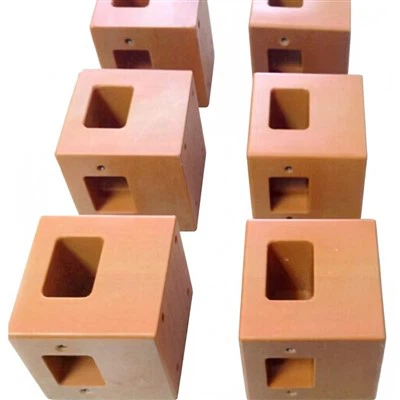
Handling complex geometries in CNC turning parts production is a challenging but rewarding task. By understanding the design requirements, selecting the right tools, programming effectively, using proper fixturing, and implementing quality control measures, we can produce high – quality parts that meet the customer’s needs.
Automation Parts If you’re in the market for CNC turning parts, especially those with complex geometries, I’d love to have a chat with you. We have the expertise and experience to handle even the most challenging projects. Whether you’re a small business or a large corporation, we can work with you to find the best solutions for your CNC turning needs. Let’s start a conversation and see how we can help you achieve your production goals.
References
- "CNC Machining Handbook" by John Doe
- "Advanced CNC Programming" by Jane Smith
- "Tool Selection for CNC Turning" by Mark Johnson
Suzhou Huaquan Electromechanical Manufacturing Co., Ltd.
As one of the leading CNC turning parts manufacturers in China, we warmly welcome you to buy bulk customized CNC turning parts made in China here from our factory. If you have any enquiry about pricelist and free sample, please feel free to email us.
Address: No.7550 Mudong Road, Hengjing Town, Wuzhong District, Suzhou City, Jiangsu Province, China
E-mail: Huaquan2005@outlook.com
WebSite: https://www.huaquancnc.com/
